Find Your Property

hamburger-background
Estate Agents in
Romford
239 Cranbrook Road , Ilford, IG1 4TD

Letting Agents In Romford

Lettings, guaranteed rent & property management in Romford

Wextons are letting agents in Romford, specialising in guaranteed rent and full property management for landlords across the town and its surrounding areas. Finding a reliable tenant, keeping up with compliance, and making sure rent arrives on time every month — it’s a lot to manage alone. Wextons take care of all of it, offering guaranteed rent schemes of up to five years and 24-hour property management with 0% commission. Whether you own a flat near the town centre or a family home in Gidea Park, we know this part of east London and what it takes to let property here successfully. Keep reading to find out more about our services and the local area.

Guaranteed Rent

Join and get 100% of your rent paid without fail. With 1-5 year leasing, 0% commission, carefully vetted private tenants, and even 3 months rent paid in advance for all your properties. Get in touch with our Romford estate agents today.

Lettings Services

Being a landlord isn’t easy. From tenant trouble to late-night maintenance calls, it can feel like a second job. Let our Romford letting agents at Wextons manage the property for you, handling tenant finding, regular inspections, legal compliance and paperwork, so your rental properties stay profitable for the long term.

Our Guide To Romford

Romford is one of east London’s most established towns in east London, with a long history as a market town, strong transport links to central London, and a well-developed retail and commercial centre. Keen to know more about what Romford has to offer buyers, tenants and landlords and tenants alike? Keep reading to see what the area has to offer.

  • About Romford

    About Romford

    Romford sits 14 miles northeast of Charing Cross, forming the administrative heart of the London Borough of Havering. It’s one of the largest commercial and retail centres in Greater London, designated as a major metropolitan centre in the London Plan — yet it retains a distinct identity that sets it apart from the inner boroughs further west.

    The town’s origins stretch back to at least 1177, when it was recorded as Romfort, meaning “the wide or spacious ford” in Old English, a reference to a crossing point over the River Rom on the old London to Colchester road. Its market was granted a royal charter by King Henry III in 1247 and supplied goods to the Royal Court in London. Livestock trading dominated for centuries, with sheep, cattle and corn filling the market place well into the 20th century. Today, Romford Market still operates three days a week at the same central site, making it one of the longest-running markets in the country.

    The opening of the railway in 1839 transformed the town. What had been a modest coaching stop on the Essex road became a commuter suburb within a generation. By the early 20th century, residential expansion was pushing outward in every direction — east towards Gidea Park, north towards Collier Row and Harold Hill. The post-war period brought further large-scale housing, particularly with the Harold Hill estate, built from 1948 to rehouse Londoners displaced by wartime bombing.

    In 1965, Romford merged with the Hornchurch Urban District to form the London Borough of Havering, at which point it formally became part of Greater London rather than Essex — a shift that still prompts debate among locals. The town now draws around 21 million visitors a year to its shopping and leisure offer, anchored by The Liberty and The Brewery shopping centres.

    For those considering a property here, Romford offers considerably more space per pound than comparable zones closer to central London. Its position on the Elizabeth line, paired with a full range of schools, parks and retail, makes it particularly appealing to families and young professionals who want room to breathe without a lengthy commute. Neighbouring Hornchurch and Upminster sit within easy reach, extending the range of options for tenants and landlords looking across the wider Havering area.

  • Property Market

    Property Market

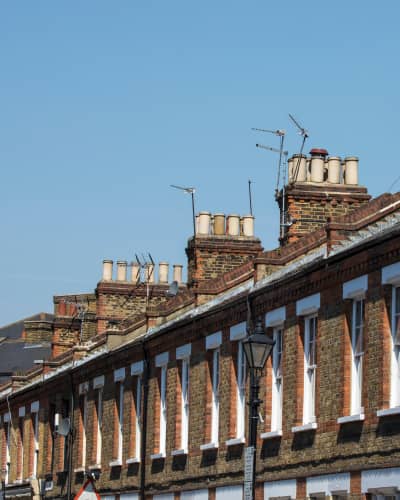
    Property styles in Romford: Romford’s housing stock spans several distinct eras. Victorian and Edwardian terraced houses sit alongside the interwar semis that were built rapidly during the 1920s and 1930s as the town’s population swelled. Post-war additions include brick-built terraces, maisonettes and low-rise estates, while more recent years have brought modern apartment blocks to the town centre and areas close to the station. Gidea Park stands apart for its collection of Arts and Crafts and exhibition houses, some dating from the 1911 and 1934 Gidea Park exhibitions, which give that neighbourhood a distinct architectural quality not found elsewhere in the town.

    The most sought-after addresses tend to cluster in Gidea Park and Emerson Park, where larger detached homes sit on generous plots. Rise Park and Squirrels Heath also attract buyers looking for well-proportioned family houses on quieter residential streets.

    Developments: Romford has seen significant development activity in recent years, driven in large part by the arrival of the Elizabeth line and ongoing regeneration pressure from the Greater London Authority. The Waterfront scheme near the River Rom has introduced modern apartments with private outdoor space. The Brewery site redevelopment added residential units above retail, and further schemes near the station — including proposals for taller residential towers — reflect the town’s growing status as a target for housing investment in outer east London.

    Property prices: According to Rightmove, the average sold price in Romford over the last year was approximately £424k. Terraced properties averaged around £286k, semi-detached homes around £355k, and detached properties around £468k. ONS data for the London Borough of Havering puts the provisional average house price at £451k as of October 2025, up 5.3% year-on-year — outperforming the wider London average, which fell by 2.4% over the same period.

    Rental market: The private rental market in Havering has seen strong upward pressure. According to ONS data, average private rents in Havering reached £1,561 per month in November 2025, up 8.3% from £1,441 in November 2024 — a rate of increase well above the London average of 2.8% over the same period. Rents for flats and maisonettes rose by 8.5%, while one-bedroom properties saw an 8.8% increase year-on-year. For landlords, Romford’s comparatively lower purchase prices relative to inner London zones, combined with this sustained rental growth, tend to produce stronger yields than are available closer to the centre. The presence of the Elizabeth line continues to draw working tenants to the area, keeping void periods short and demand steady.

  • Romford Transport

    Romford Transport

    Romford is one of the better-connected towns on London’s eastern fringe, with the Elizabeth line placing central London well within commuting range for tenants and workers throughout the borough.

    1. Car & Road: The A12 trunk road runs north of the town, giving drivers a direct route into east London and towards the M25 at junction 28, roughly 7 miles away. The A118 links Romford westward through Ilford towards Stratford, while the A127 heads southeast towards Southend-on-Sea from the Gallows Corner junction, approximately 2 miles from the town centre.
    2. Train: Romford station is served by the Elizabeth line, placing Liverpool Street around 20 minutes away and Canary Wharf around 25 minutes. Through services continue westward to Paddington, Bond Street and Reading without requiring a change. The station also sees off-peak Greater Anglia services towards Southend Victoria. A separate London Overground service — the Liberty line — connects Romford to Upminster in around 9 minutes, with an interchange onto the District line and the c2c route to Fenchurch Street.
    3. Bus: A number of TfL bus routes operate from Romford town centre, serving Harold Hill, Collier Row, Hornchurch, Ilford and Stratford, among other destinations. Night bus services run to Stratford, Harold Hill and Paddington.
    4. Cycling & Walking: The town centre is largely flat and walkable, with the market area, station and main shopping streets all within a short walk of one another. Cycling infrastructure is limited in places but improving, and the town’s layout is reasonably navigable by bike for shorter local journeys.
    5. Nearest Airport: London Stansted Airport is approximately 30 miles north via the M11, reachable in around 40–50 minutes by car depending on traffic. London City Airport is around 12 miles southwest and accessible by public transport via the Elizabeth line and DLR.
    6. Travel times at a glance: Liverpool Street ~20 mins (Elizabeth line); Canary Wharf ~25 mins; Paddington ~40 mins; Stratford ~12 mins; Upminster ~9 mins (Liberty line).

    These transport links put Romford firmly within reach of the major employment centres of central and east London, which supports consistent tenant demand — particularly among professionals commuting to the City, Canary Wharf and Stratford.

    For more information about transport options in Romford, take a look here.

  • Places Of Interest

    Places Of Interest

    Romford’s long history as a market town, combined with its parks, theatres and museums, gives it a genuine depth of places to visit that goes well beyond the town centre’s retail offer.

    • Romford Market: One of England’s oldest outdoor markets, operating on the same Market Place site since 1247 by Royal Charter of King Henry III. Open every Wednesday, Friday and Saturday, it runs to around 200 stalls covering fresh produce, fashion, household goods and more. The market remains a defining feature of the town and a reliable footfall driver for the surrounding area.
    • Havering Museum: Housed on part of the old Ind Coope Brewery site on Market Place, this volunteer-run local history museum opened in 2010 with support from the Heritage Lottery Fund. Two permanent galleries cover the history of the borough, with a temporary exhibition space alongside. It offers an accessible introduction to how Romford and the wider Havering area developed over the centuries. Find out more here.
    • Raphael Park: A 35-acre public park off Brentwood Road, laid out on the grounds of a former country estate and retaining landscaping by Sir Humphrey Repton, the noted Georgian garden designer. The park includes a lake, tennis courts, a bandstand and a children’s play area, and holds Green Flag status. It’s one of the most well-used green spaces in the borough and regularly hosts summer open-air performances.
    • St Edward the Confessor Church: A Grade II*-listed Gothic Revival church on Market Place, completed in 1850 on a site with religious use dating back to the 14th century. Notably, the building incorporates stonework salvaged from John Nash’s Quadrant on Regent Street when it was partially demolished in the 1840s. It hosts regular concerts and events throughout the year.
    • Brookside Theatre: Located on Eastern Road, Brookside is a 194-seat professional theatre and the only dedicated arts venue of its kind in Romford. It stages a full programme of drama, musicals and family shows, and has won awards for its productions. See the current programme here.
    • Romford Shopping Hall: An early 20th-century market hall on Market Place with a distinctive stone portico. Inside, independent traders occupy small units selling everything from haberdashery and fabrics to antiques and fresh food. It’s one of the few surviving examples of a traditional covered market hall in outer east London.
    • Bedfords Park: A 215-acre country park and nature reserve on the northern edge of Romford, owned and managed by the London Borough of Havering. The park includes woodland, meadows, ponds and open grassland, with panoramic views towards central London and Kent. A visitor centre on site is operated by Essex Wildlife Trust. Red deer and Red Poll cattle graze within the reserve.
    • Romford War Memorial: A First World War civic memorial on Market Place, designed in 1921 by architect J.W. Hammond. It records the names of those from Romford who fell in the First World War, and was later adapted to include the civilian and service dead of the Second World War. It remains a focal point for Remembrance events in the town.
    • Romford Greyhound Stadium: A well-established sports and entertainment venue on London Road, hosting regular greyhound racing meetings alongside dining and events. It’s one of the more distinctive leisure offerings in outer east London and draws a loyal following from across the borough and beyond.
  • Living In Romford

    Living In Romford

    Romford functions as a fully self-contained town rather than a dormitory suburb — most of what daily life requires is on the doorstep, from major supermarkets and retail to healthcare and green space.

    • Shopping: The Liberty Shopping Centre on The Brewery RM1 is the main retail anchor, covering 432,000 sq ft across around 100 stores including Marks & Spencer, Primark, H&M, Next, Boots and JD Sports. It draws around 23 million visitors per year. The Mercury Mall on Mercury Gardens connects to The Liberty by underpass and adds further retail and leisure options, including the recently reopened Lumiere Cinema. The Brewery shopping complex on Waterloo Road provides additional stores and a Sainsbury’s supermarket. Romford Market (open Wednesday, Friday and Saturday) supplements the town’s food shopping offer with independent butchers, fishmongers and greengrocers. South Street and the High Street carry a further range of high street and independent shops.
    • Eating & Drinking: South Street is the centre of Romford’s evening offer, known across east London for its concentration of pubs, bars and restaurants. The Golden Lion on the High Street is one of the oldest pubs in town, with origins dating to the 15th century as a coaching inn. The market area also supports a number of independent food traders.
    • Leisure & Recreation: Raphael Park off Brentwood Road is the most central green space, with a lake, tennis courts and a bandstand. Bedfords Park to the north provides 215 acres of woodland and open ground. Romford Leisure Centre on Rom Valley Way provides a pool, gym and fitness studios. Rise Park and Harrow Lodge Park offer further green space to the north and west of the centre.
    • Healthcare: Queen’s Hospital (Rom Valley Way, RM7 0AG) is the principal NHS hospital for the area, a large teaching hospital opened in 2006 and run by Barking, Havering and Redbridge University Hospitals NHS Trust. It serves a catchment of around 800,000 people. A number of GP surgeries operate across the town, with practices in the RM1 and RM7 postcodes. The proximity of a major hospital supports tenant confidence in the area, particularly for families and older renters.

Romford sits 14 miles northeast of Charing Cross, forming the administrative heart of the London Borough of Havering. It’s one of the largest commercial and retail centres in Greater London, designated as a major metropolitan centre in the London Plan — yet it retains a distinct identity that sets it apart from the inner boroughs further west.

The town’s origins stretch back to at least 1177, when it was recorded as Romfort, meaning “the wide or spacious ford” in Old English, a reference to a crossing point over the River Rom on the old London to Colchester road. Its market was granted a royal charter by King Henry III in 1247 and supplied goods to the Royal Court in London. Livestock trading dominated for centuries, with sheep, cattle and corn filling the market place well into the 20th century. Today, Romford Market still operates three days a week at the same central site, making it one of the longest-running markets in the country.

The opening of the railway in 1839 transformed the town. What had been a modest coaching stop on the Essex road became a commuter suburb within a generation. By the early 20th century, residential expansion was pushing outward in every direction — east towards Gidea Park, north towards Collier Row and Harold Hill. The post-war period brought further large-scale housing, particularly with the Harold Hill estate, built from 1948 to rehouse Londoners displaced by wartime bombing.

In 1965, Romford merged with the Hornchurch Urban District to form the London Borough of Havering, at which point it formally became part of Greater London rather than Essex — a shift that still prompts debate among locals. The town now draws around 21 million visitors a year to its shopping and leisure offer, anchored by The Liberty and The Brewery shopping centres.

For those considering a property here, Romford offers considerably more space per pound than comparable zones closer to central London. Its position on the Elizabeth line, paired with a full range of schools, parks and retail, makes it particularly appealing to families and young professionals who want room to breathe without a lengthy commute. Neighbouring Hornchurch and Upminster sit within easy reach, extending the range of options for tenants and landlords looking across the wider Havering area.
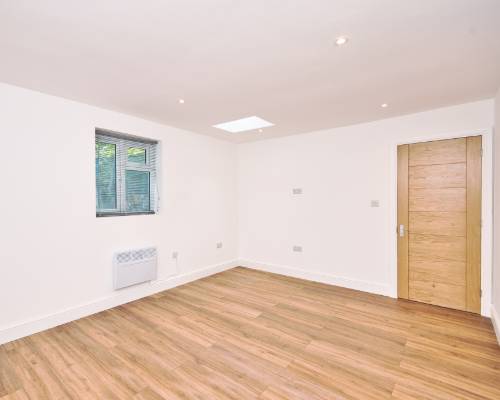
Property styles in Romford: Romford’s housing stock spans several distinct eras. Victorian and Edwardian terraced houses sit alongside the interwar semis that were built rapidly during the 1920s and 1930s as the town’s population swelled. Post-war additions include brick-built terraces, maisonettes and low-rise estates, while more recent years have brought modern apartment blocks to the town centre and areas close to the station. Gidea Park stands apart for its collection of Arts and Crafts and exhibition houses, some dating from the 1911 and 1934 Gidea Park exhibitions, which give that neighbourhood a distinct architectural quality not found elsewhere in the town.

The most sought-after addresses tend to cluster in Gidea Park and Emerson Park, where larger detached homes sit on generous plots. Rise Park and Squirrels Heath also attract buyers looking for well-proportioned family houses on quieter residential streets.

Developments: Romford has seen significant development activity in recent years, driven in large part by the arrival of the Elizabeth line and ongoing regeneration pressure from the Greater London Authority. The Waterfront scheme near the River Rom has introduced modern apartments with private outdoor space. The Brewery site redevelopment added residential units above retail, and further schemes near the station — including proposals for taller residential towers — reflect the town’s growing status as a target for housing investment in outer east London.

Property prices: According to Rightmove, the average sold price in Romford over the last year was approximately £424k. Terraced properties averaged around £286k, semi-detached homes around £355k, and detached properties around £468k. ONS data for the London Borough of Havering puts the provisional average house price at £451k as of October 2025, up 5.3% year-on-year — outperforming the wider London average, which fell by 2.4% over the same period.

Rental market: The private rental market in Havering has seen strong upward pressure. According to ONS data, average private rents in Havering reached £1,561 per month in November 2025, up 8.3% from £1,441 in November 2024 — a rate of increase well above the London average of 2.8% over the same period. Rents for flats and maisonettes rose by 8.5%, while one-bedroom properties saw an 8.8% increase year-on-year. For landlords, Romford’s comparatively lower purchase prices relative to inner London zones, combined with this sustained rental growth, tend to produce stronger yields than are available closer to the centre. The presence of the Elizabeth line continues to draw working tenants to the area, keeping void periods short and demand steady.

Romford is one of the better-connected towns on London’s eastern fringe, with the Elizabeth line placing central London well within commuting range for tenants and workers throughout the borough.

  1. Car & Road: The A12 trunk road runs north of the town, giving drivers a direct route into east London and towards the M25 at junction 28, roughly 7 miles away. The A118 links Romford westward through Ilford towards Stratford, while the A127 heads southeast towards Southend-on-Sea from the Gallows Corner junction, approximately 2 miles from the town centre.
  2. Train: Romford station is served by the Elizabeth line, placing Liverpool Street around 20 minutes away and Canary Wharf around 25 minutes. Through services continue westward to Paddington, Bond Street and Reading without requiring a change. The station also sees off-peak Greater Anglia services towards Southend Victoria. A separate London Overground service — the Liberty line — connects Romford to Upminster in around 9 minutes, with an interchange onto the District line and the c2c route to Fenchurch Street.
  3. Bus: A number of TfL bus routes operate from Romford town centre, serving Harold Hill, Collier Row, Hornchurch, Ilford and Stratford, among other destinations. Night bus services run to Stratford, Harold Hill and Paddington.
  4. Cycling & Walking: The town centre is largely flat and walkable, with the market area, station and main shopping streets all within a short walk of one another. Cycling infrastructure is limited in places but improving, and the town’s layout is reasonably navigable by bike for shorter local journeys.
  5. Nearest Airport: London Stansted Airport is approximately 30 miles north via the M11, reachable in around 40–50 minutes by car depending on traffic. London City Airport is around 12 miles southwest and accessible by public transport via the Elizabeth line and DLR.
  6. Travel times at a glance: Liverpool Street ~20 mins (Elizabeth line); Canary Wharf ~25 mins; Paddington ~40 mins; Stratford ~12 mins; Upminster ~9 mins (Liberty line).

These transport links put Romford firmly within reach of the major employment centres of central and east London, which supports consistent tenant demand — particularly among professionals commuting to the City, Canary Wharf and Stratford.

For more information about transport options in Romford, take a look here.

Romford’s long history as a market town, combined with its parks, theatres and museums, gives it a genuine depth of places to visit that goes well beyond the town centre’s retail offer.

  • Romford Market: One of England’s oldest outdoor markets, operating on the same Market Place site since 1247 by Royal Charter of King Henry III. Open every Wednesday, Friday and Saturday, it runs to around 200 stalls covering fresh produce, fashion, household goods and more. The market remains a defining feature of the town and a reliable footfall driver for the surrounding area.
  • Havering Museum: Housed on part of the old Ind Coope Brewery site on Market Place, this volunteer-run local history museum opened in 2010 with support from the Heritage Lottery Fund. Two permanent galleries cover the history of the borough, with a temporary exhibition space alongside. It offers an accessible introduction to how Romford and the wider Havering area developed over the centuries. Find out more here.
  • Raphael Park: A 35-acre public park off Brentwood Road, laid out on the grounds of a former country estate and retaining landscaping by Sir Humphrey Repton, the noted Georgian garden designer. The park includes a lake, tennis courts, a bandstand and a children’s play area, and holds Green Flag status. It’s one of the most well-used green spaces in the borough and regularly hosts summer open-air performances.
  • St Edward the Confessor Church: A Grade II*-listed Gothic Revival church on Market Place, completed in 1850 on a site with religious use dating back to the 14th century. Notably, the building incorporates stonework salvaged from John Nash’s Quadrant on Regent Street when it was partially demolished in the 1840s. It hosts regular concerts and events throughout the year.
  • Brookside Theatre: Located on Eastern Road, Brookside is a 194-seat professional theatre and the only dedicated arts venue of its kind in Romford. It stages a full programme of drama, musicals and family shows, and has won awards for its productions. See the current programme here.
  • Romford Shopping Hall: An early 20th-century market hall on Market Place with a distinctive stone portico. Inside, independent traders occupy small units selling everything from haberdashery and fabrics to antiques and fresh food. It’s one of the few surviving examples of a traditional covered market hall in outer east London.
  • Bedfords Park: A 215-acre country park and nature reserve on the northern edge of Romford, owned and managed by the London Borough of Havering. The park includes woodland, meadows, ponds and open grassland, with panoramic views towards central London and Kent. A visitor centre on site is operated by Essex Wildlife Trust. Red deer and Red Poll cattle graze within the reserve.
  • Romford War Memorial: A First World War civic memorial on Market Place, designed in 1921 by architect J.W. Hammond. It records the names of those from Romford who fell in the First World War, and was later adapted to include the civilian and service dead of the Second World War. It remains a focal point for Remembrance events in the town.
  • Romford Greyhound Stadium: A well-established sports and entertainment venue on London Road, hosting regular greyhound racing meetings alongside dining and events. It’s one of the more distinctive leisure offerings in outer east London and draws a loyal following from across the borough and beyond.

Romford functions as a fully self-contained town rather than a dormitory suburb — most of what daily life requires is on the doorstep, from major supermarkets and retail to healthcare and green space.

  • Shopping: The Liberty Shopping Centre on The Brewery RM1 is the main retail anchor, covering 432,000 sq ft across around 100 stores including Marks & Spencer, Primark, H&M, Next, Boots and JD Sports. It draws around 23 million visitors per year. The Mercury Mall on Mercury Gardens connects to The Liberty by underpass and adds further retail and leisure options, including the recently reopened Lumiere Cinema. The Brewery shopping complex on Waterloo Road provides additional stores and a Sainsbury’s supermarket. Romford Market (open Wednesday, Friday and Saturday) supplements the town’s food shopping offer with independent butchers, fishmongers and greengrocers. South Street and the High Street carry a further range of high street and independent shops.
  • Eating & Drinking: South Street is the centre of Romford’s evening offer, known across east London for its concentration of pubs, bars and restaurants. The Golden Lion on the High Street is one of the oldest pubs in town, with origins dating to the 15th century as a coaching inn. The market area also supports a number of independent food traders.
  • Leisure & Recreation: Raphael Park off Brentwood Road is the most central green space, with a lake, tennis courts and a bandstand. Bedfords Park to the north provides 215 acres of woodland and open ground. Romford Leisure Centre on Rom Valley Way provides a pool, gym and fitness studios. Rise Park and Harrow Lodge Park offer further green space to the north and west of the centre.
  • Healthcare: Queen’s Hospital (Rom Valley Way, RM7 0AG) is the principal NHS hospital for the area, a large teaching hospital opened in 2006 and run by Barking, Havering and Redbridge University Hospitals NHS Trust. It serves a catchment of around 800,000 people. A number of GP surgeries operate across the town, with practices in the RM1 and RM7 postcodes. The proximity of a major hospital supports tenant confidence in the area, particularly for families and older renters.

Need Guaranteed Rent?

We will guarantee your rent for up to 5 years and will beat any rent that you have been offered subject to demand.

Blogs | Romford Estate Agency

Explore our selection of helpful tips, guides and news updates on Romford property and beyond.

Areas We Cover

Contact Us

"*" indicates required fields

This field is for validation purposes and should be left unchanged.
Name*
What are you interested in?
(Please select all that apply)

View our privacy policy regarding website enquiries.

This field is hidden when viewing the form

Lettings Valuation

"*" indicates required fields

This field is for validation purposes and should be left unchanged.
Name*

View our privacy policy regarding website enquiries.

This field is hidden when viewing the form
Ritu Shah
Excellent services! Shakil and team have been fantastically doing this! Have been associated with them for more than 2 years now, Highly recommend them! 👍🏻
Stuti Agrawal
My experience with Wentworth has been excellent from the very start and continues to be so. The entire process - from viewing to moving in - was smooth and hassle-free. Shakil has been clear in his communication, always helpful, and quick to respond. He ensured the property was ready & deep cleaned ...
Akhil gupta
Good and reliable service with prompt response rate. Nice properties in the portfolio and overall pleasant experience with this agent.
Casey Westwater
Reliable, friendly team always to help. Definitely recommend!
Bhavi Chordia
Shaqil has been very helpful. The properties showed by him are immaculate. Highly recommended.
Giorgi Xiaoyu Zhang
I had a great experience with Wentworth Properties. The team is always very responsive, and any issues are resolved incredibly quickly. Shakil and Tracy in particular, were very professional and responsible, ensuring everything was handled smoothly. They are very caring and willing to go an extra m...
beckie_di
Christaki Petrai
One of the best……,
Abdus Salam
Superb customer service. Will never rest until you find the perfect property. Thoroughly recommend them.
Saud Bin khalid
google-logo
Customer Reviews 5
Based on 18 reviews