Secure Your Rental Income
Begin your journey with a free property valuation, and benefit from our guaranteed rent or property management service.

Canning Town is one of East London’s fastest-changing areas. Here, buyers are faced with choosing between a flat on a quiet residential road backing onto a new public realm scheme, and another on a through-route between construction hoardings. How can you work out what the future will hold? For landlords in particular, understanding which parts of Canning Town are already settled and which are still mid-transformation can make all the difference between a property that lets quickly and one that sits.
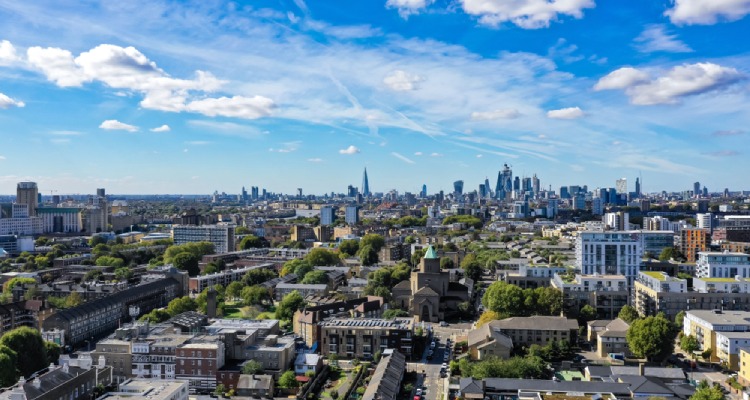
Canning Town sits in the London Borough of Newham, with the station of the same name acting as a Jubilee line and DLR interchange. In terms of residential areas, there’s the town centre and Hallsville Quarter development to the north of the station. Moving south and east, there’s the riverside and London City Island area. Then to the west, there the older residential streets, running towards Custom House. Each has a different price point, attracts a different type of resident, and is following a different regeneration timeline. This guide works through all three, street by street and area by area.
The top end of the Canning Town market is almost entirely defined by the new-build and waterfront stock that has come forward over the last decade. Period housing is scarce, so rather than equating to Victorian brickwork and original cornicing, in Canning Town a premium property is set apart by its specification, outlook, and proximity to the station and amenities.
London City Island commands the highest values in the area. This peninsula development, situated on the former Leamouth Peninsula between the River Lea and Bow Creek, has become one of the most distinctive addresses in E14. The island is car-free, has its own pedestrian bridge to the mainland, and benefits from the DLR at East India being a short walk away. The combination of water views, high-specification apartments, and the presence of the English National Ballet at the Mulryan Centre for Dance, and the Royal Academy of Music’s new London City Island campus, has created a new niche in what was, until recently, an entirely industrial part of the borough. Average sold prices for flats here sit at at £533,721, well above the wider Canning Town average of £414,806, according to Rightmove.
Hallsville Quarter is the other address that lets and sells at the top of the local range. The development sits directly adjacent to Canning Town station, with Jubilee line access to Canary Wharf in roughly four minutes. Phase 4 topped out in early 2026 and is due for completion in summer 2026, adding further residential and student accommodation to the scheme. Proximity to the station and the improving public realm around the town centre are the main price drivers here.
For those looking at the older housing stock, the streets immediately west of the station, including Barking Road and its residential side streets, represent the more established end of the market. These are predominantly terraced properties rather than the flatted new-build stock that dominates elsewhere, and they appeal to buyers and tenants who want more space for the money.
Canning Town is best understood as three distinct zones, each at a different stage of change and suited to a different buyer or tenant profile.
| Zone | Character | Who it suits | Price indicator |
|---|---|---|---|
| London City Island / Leamouth Peninsula | Waterfront, car-free, arts-led, high specification | Young professionals, design-conscious tenants, long-term investors | Above-average for E14; premium flats |
| Hallsville Quarter / Town Centre | Station-adjacent, regeneration-led, improving public realm | Commuters, buy-to-let landlords, tenants prioritising transport | Mid-to-upper range; mostly new-build flats |
| West Canning Town / Custom House borders | Older terraced housing, more settled residential character | Families, tenants needing more space, value-focused buyers | Below Canning Town average; terraced stock |
Conservation areas don’t feature in Canning Town as they do in older parts of East London. The area was heavily bombed during the Second World War and extensively rebuilt, leaving few architectural traces behind. With no designated conservation areas within Canning Town itself, there are fewer restrictions on development but also less protection for what older stock does exist.
School catchments are an important consideration for family buyers and tenants. Newham’s school places and catchment information is published by Newham Council. Home to school distances are the crucial factor in Newham, rather than arbitrary school catchments. Data is released on the previous year’s admission distances, so check directly with the council before committing to a particular road with the expectation of securing a place.
Transport proximity is a powerful influence on demand and property prices in Canning Town. Streets within easy walking distance of Canning Town station (Jubilee line and DLR) generally command a sizeable premium. However, buyers and renters can find a compromise. The DLR also serves Pontoon Dock and West Silvertown to the east, an option to consider for those wanting access at lower property prices.
As of late 2026, average property prices in Canning Town are around £414,806 according to Rightmove data, with flats averaging £407,899 and terraced houses £429,728. Semi-detached properties reaching an average of £438,250, though these are far less common in this part of East London.
Larger, family-sized apartment can be harder to find, and can sell for significantly more than 1- or 2-bed apartments. The price differential between London City Island and the older terraced streets to the west can also be substantial. The Island’s premium is largely down to properties’ specification and their water outlook, as well as its rare car-free environment.
The west Canning Town terraces are cheaper per square foot but offer more internal space and garden access. For landlords, the yield calculation will often come out in favour of the terraced stock, since the associated purchase prices are lower relative to achievable rents. In Canning Town as a whole, property purchase prices are often cheaper than comparable homes in Canary Wharf.
The streets north of Canning Town station, leading towards Bow Creek and the proposed Enterprise Hub site, could be worth watching. Newham Council is considering plans to transform a 60-hectare industrial zone to the northwest of the town centre into a mixed-use Enterprise Hub, including a new pedestrian and cycle bridge across the River Lea. If that scheme moves forward in line with the proposal, the residential streets closest to Bow Creek could benefit from new bridges, walkways and tree-lined borders.
Cody Dock is another area that has quietly built a following. This industrial heritage site on the River Lea has been converted into a community arts and events space that’s already making itself known. The streets closest to it are not yet priced at a premium, but the growing cultural venue and the planned riverside walkway along the River Lea (showcased at the London Festival of Architecture in June 2026) make it worth keeping an eye on.
The Vincent Street site is delivering around 147 new homes, with completion expected in 2027, as part of a community-led masterplan to eventually introduce 1,400 new homes. The surrounding streets could see positive changes as a result, but have not seen a rise in house prices so far – again, one to watch perhaps.

Canning Town does not have the enduring Victorian terraces you will find in Stratford, or the Edwardian streets seen around much of Forest Gate. After the war, much of Canning Town was cleared and rebuilt, and over the last 20 years, former industrial areas have made way for yet more regeneration. The result is a mix of architecture with purpose-built flats from a progression of decades.
The older terraced streets to the west, particularly those running off Barking Road, date from the late Victorian and Edwardian periods. Here, you can catch a glimpse of the original street pattern and the classic two-storey brick terraces with small front gardens and yards.
Moving into London City Island and Hallsville Quarter, contemporary design takes over. Riverside blocks at the Island reach several storeys and feature floor-to-ceiling glazing, private balconies, and often communal roof terraces. These properties are set apart architecturally from anything else in the area, and of course, appeal to a specific buyer and tenant profile.
For a more detailed look at property types, floor plans, and what to look for when assessing a specific building or conversion in Canning Town, the companion Property & Architecture guide covers this in depth.
Canning Town has a high ratio of renters relative to owner-occupiers, as does the borough as a whole. As per ONS data from the 2021 Census, Newham is one of the most heavily rented boroughs in England with 38.8% of the population renting privately. Canning Town’s rapid development of purpose-built flats has reinforced that pattern too. The new-build schemes at Hallsville Quarter and London City Island are heavily weighted towards private rented sector tenants, with a significant proportion of units bought by investors at launch.
The older terraced streets to the west are home to a wider mix, with a higher proportion of long-term owner-occupiers living alongside renters. These streets tend to attract families and tenants looking for more space, creating a somewhat more settled, residential feel.
Phase 4 of Hallsville Quarter, due for completion in summer 2026, will add 375 student rooms to the town centre, which will further shape the rental mix in the immediate vicinity of the station. Landlords buying in that zone should factor in the likely effect on the tenant pool and achievable rents for smaller units.
| Zone | Predominant tenure | Typical profile |
|---|---|---|
| London City Island | Private rented, some owner-occupiers | Young professionals, design-led tenants |
| Hallsville Quarter / Town Centre | Heavily private rented, investor-owned | Commuter tenants, students |
| West Canning Town | Mixed, higher owner-occupier share | Families, longer-term residents |
The scale of development activity in Canning Town is remarkable, even by East London standards. The £3.7 billion regeneration programme overseen by Newham Council and its partners is vast, with a target of 10,000 new homes as well as new community and public spaces.
For buyers and landlords, the key question is really, which streets are in the midst of it, and what’s the direction of travel?
Hallsville Quarter Phase 4 completes in summer 2026. Streets adjacent to the scheme will see improved public realm and footfall as the development is occupied. The student accommodation component will change the local demographic mix around the station.
The Vincent Street kickstart site delivers approximately 147 homes from 2027. The surrounding residential streets could see improved amenity as the scheme completes.
The Canning Town Estate Regeneration scheme will deliver up to 1,750 new homes across three estates, with at least 50% being affordable. This is a longer-term scheme, and streets adjacent to the estates will experience disruption during construction before any amenity benefit arrives.
The proposed Enterprise Hub and Mayer Parry Bridge to the northwest of the town centre are at an earlier planning stage. If approved, they could add new routes including a pedestrian and cyclist crossing between Canning Town and Tower Hamlets across the River Lea, with potential knock-on effects for residential values in the closest streets.
The Newham Heritage Centre, due to open at the site of Canning Town Old Library in 2027, adding a much-needed cultural and historical touchstone to the heart of the area. Landlords may want to keep its location in mind.
Once you’ve identified the right part of Canning Town, speak to a local agent to find out what’s on the market today. If you’re a landlord thinking about how to maximise returns from a Canning Town property, our guaranteed rent scheme is worth a look. For anything else, contact us directly.
London City Island and Hallsville Quarter are sought-after addresses in Canning Town, offering the highest specifications and the strongest transport connections. For buyers or tenants wanting more space at a lower price, the older terraced streets west of the station can offer lower prices and a more settled residential character.
The main price drivers are proximity to Canning Town station, water outlook, and the specification of the development. London City Island commands a premium for its waterfront position and car-free environment, while streets further from the station and the new-build schemes tend to be noticeably cheaper.
Canning Town has strong rental demand from commuters and young professionals, and is often more cost-effective than Canary Wharf for comparable flat sizes. Landlords should pay close attention to which phase of regeneration a specific street or development is in. Construction activity can affect how quickly a property lets in the near term.
The streets closest to Cody Dock and Bow Creek are worth watching, particularly if the proposed Enterprise Hub and Mayer Parry Bridge scheme moves forwards. The area around the Vincent Street development is also likely to improve once around 147 new homes complete in 2027.
Streets alongside Hallsville Quarter and the Vincent Street site could see the public realm improvements emerging. The longer-term estate regeneration scheme will deliver up to 1,750 new homes across three existing estates, with construction disruption in the near term followed by improved amenity once complete.
Begin your journey with a free property valuation, and benefit from our guaranteed rent or property management service.
Contact us, and we will be more than happy to help you.


Canning Town: East London's Best-Value Commuter Secret? Priced out of Canary Wharf? Canning Town sits just across the water — with the s...

Canning Town is one of East London's most dramatic property stories - a neighbourhood where a Victorian terrace can sit directly opposite...

Docklands looks like one postcode on a map - but two streets five minutes apart can feel like entirely different places to live. A quiet,...

"*" indicates required fields
"*" indicates required fields