Secure Your Rental Income
Begin your journey with a free property valuation, and benefit from our guaranteed rent or property management service.

Whatever a buyer’s preconceptions about Canning Town, they’re likely to be surprised. It’s not just that you can find a Victorian terrace sitting directly opposite a contemporary 30-storey residential tower.
More to the point, this area is still seeing new plans come to the forefront. New high rises, yes, but also the arrival of cultural spots and outdoor spaces that are adding a new facets to Canning Town’s personality.
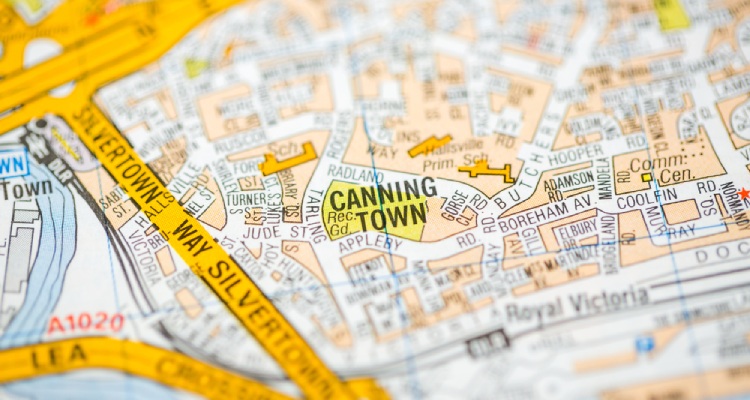
Not all of Canning Town’s 20th and 21st Century aesthetic is a purpose-made decision, with many of its earlier buildings lost during the War. Post-war clearances removed most of the remaining Victorian structures, in favour of large estates and low-rise blocks that shaped the neighbourhood for decades.
What’s happening now is the most significant reshaping event to happen since. The £3.7 billion Canning Town and Custom House regeneration programme is delivering 10,000 new homes alongside new public realm, with 3,500 already completed or on site. The result is a mix ranging from surviving period terraces to purpose-built new builds, with a pipeline of further development that will continue to alter the area’s character through the late 2020s.
| Property Type | Typical Period | Typical Tenure |
|---|---|---|
| Victorian / Edwardian terraces | 1880s-1910s | Freehold |
| Post-war low-rise estates | 1950s-1970s | Leasehold (flats) |
| Purpose-built flats (older blocks) | 1980s-2000s | Leasehold |
| New build flats (regeneration schemes) | 2010-present | Leasehold |
| Large-format new build towers | 2015-present | Leasehold |
Surviving Victorian and Edwardian terraces are concentrated in the streets north and west of the town centre. These are typically two-storey, bay-fronted properties with two to three bedrooms, and they represent a small but meaningful slice of the stock. They can also be among the most competed-for, given that freehold houses are comparatively rare in the area.
Post-war estate stock is more plentiful and tends to be arranged in low-rise flat blocks and maisonettes, some now part of the regeneration programme’s phased replacement. Older purpose-built flat blocks from the 1980s and 1990s sit at various points across the area, often leasehold with longer lease terms still remaining.
The bulk of new supply is coming through the regeneration schemes. City Island and Goodluck Hope on the Leamouth Peninsula have delivered over 2,600 homes between them, while Hallsville Quarter has established a new town centre with residential above retail. These developments are almost entirely leasehold flats, ranging from studios to three-bedroom units, typically in high-density mid- and high-rise blocks.
Average sold prices across Canning Town reached £414,806 as per Rightmove data. Flats sold for an average of £407,899, terraced properties for £429,728, and semi-detached homes for £438,250.
Canning Town has no designated conservation areas. The area’s post-war clearances and the scale of subsequent redevelopment mean there are few surviving historic buildings to protect, unlike neighbouring areas such as Bow or Poplar.
Buyers and tenants looking specifically for a conservation area setting, with all of its associated planning protections and architectural coherence, can find what they’re looking for elsewhere in Tower Hamlets or Newham.
There are no Grade I or Grade II* listed buildings within Canning Town’s immediate town centre, but there are Grade II listed buildings to enjoy – like the old library building. The absence of heritage designations means that permitted development rights apply more broadly here than in designated areas. Essentially, this affords owners of houses far more flexibility for extensions and alterations, but also means that the street’s appearance can change more rapidly.
These properties survived in the streets that escaped post-war clearance. Original internal features, such as charming cornicing, fireplaces and panel doors, can vary considerably depending on how much has been stripped during previous refurbishments. They are worth inspecting carefully – some have been well preserved, others have been heavily modernised.
These properties are the most likely to present survey complications. Flat roofs, concrete construction, and aging communal systems are all worth a closer look.
New builds in Canning Town are overwhelmingly leasehold. Lease lengths, service charge structures, and any ground rent provisions should be checked carefully before proceeding, to avoid costly surprises down the line.
Development activity in Canning Town is substantial, with regeneration schemes very much a part of the local picture now and for the years ahead.
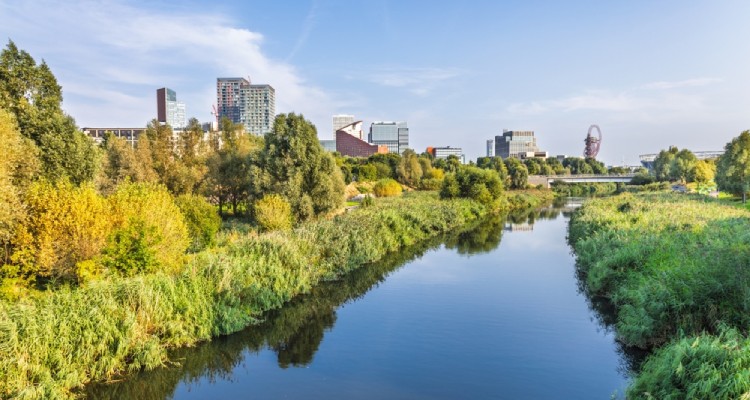
If you want a small back garden to call your own, start with Canning Town’s Victorian terraces, modest by suburban standards but precious in this part of East London. Some also feature front gardens, now converted to off-street parking.
Post-war flat blocks and most new build towers have no private gardens. Balconies are common in new build schemes, and several larger developments include communal roof terraces and landscaped podium gardens, though these are shared amenities rather than private space.
The regeneration programme has included public green space on the agenda. Hallsville Quarter’s later phases include landscaped public realm, and the Limmo Peninsula masterplan includes new waterside open space. There’s also the proposed riverside walkway along the River Lea, if delivered, would add a new focus on tree-lines walkways and public gardens. For now, though, outdoor space can be limited for the majority of Canning Town’s apartment-focused development schemes.
Off-street parking is available in some new build developments, typically at a premium through a separate leasehold arrangement. Along the Victorian terraced streets, on-street parking is generally subject to the local controlled parking zone.
Canning Town’s property stock is changing faster than almost anywhere else in East London, and knowing what you’re looking at before you sign anything is crucial.
Whether you’re a tenant assessing what a new build flat actually offers or a landlord evaluating the investment case for a regeneration scheme unit, Wextons can help you understand what’s available and what it’s worth. Contact us to discuss what you’re looking for, or register as a tenant to be matched with suitable properties as they become available.
Canning Town has a mixed stock that includes surviving Victorian and Edwardian terraces, post-war estate flats, older purpose-built flat blocks, and a large volume of new build flats from the ongoing regeneration programme. New builds currently dominate new supply, with 45 active developments in the area. Victorian terraces, which are freehold, are comparatively rare and tend to be the most competed-for.
No. Canning Town has no designated conservation areas. Post-war clearances removed most of the original Victorian fabric, and the scale of subsequent redevelopment means there is little surviving historic streetscape to protect. Buyers or tenants seeking a conservation area setting will need to look at neighbouring parts of Tower Hamlets or Newham.
The majority of property in Canning Town is leasehold, reflecting the dominance of flat stock across both older blocks and new build schemes. Freehold properties do exist, primarily among the surviving Victorian and Edwardian terraces, but they are a small proportion of the overall stock. Leasehold buyers should check lease lengths, ground rent terms, and service charge histories carefully before proceeding.
For new build flats, the key issues are legal and financial rather than structural. Check the lease length, any ground rent escalation clauses, and the service charge history including reserve fund levels. Some schemes completed in the 2010s have ground rent provisions that can affect mortgage eligibility and future resale value, so it is worth having a solicitor review the lease in detail before exchange.
Parts of Canning Town fall within Flood Zone 2 or 3 according to Environment Agency mapping. Buyers and tenants should check the flood risk designation for any specific property before committing. Flood risk can affect buildings insurance premiums and, for buyers, mortgage availability, so it is worth confirming the position early in the process.
Begin your journey with a free property valuation, and benefit from our guaranteed rent or property management service.
Contact us, and we will be more than happy to help you.


Canning Town: East London's Best-Value Commuter Secret? Priced out of Canary Wharf? Canning Town sits just across the water - with the s...

Canning Town is changing faster than almost anywhere else in East London — and where exactly you buy or rent within it matters enormously...

Docklands looks like one postcode on a map - but two streets five minutes apart can feel like entirely different places to live. A quiet,...
"*" indicates required fields
"*" indicates required fields